Selling a house can feel expensive before you even get started. Between repairs, cleaning, staging, photography, open houses, agent commissions, closing costs, and months of waiting, many homeowners start wondering: how do you sell your house yourself without losing control of the process?
That is where FSBO comes in.
For some homeowners, selling a house by owner can be a smart way to save money and stay in control. For others, especially those dealing with repairs, foreclosure, inherited property, divorce, liens, bad tenants, or a fast-moving deadline, the FSBO process can become stressful quickly.
At Quick Cash 4 Real Estate, we buy houses in Florida for cash and help homeowners skip repairs, showings, agent fees, commissions, and hidden costs. But we also believe sellers should understand all their options before making a decision.
This guide explains the steps to sell a house yourself, the pros and cons of FSBO, the paperwork involved, and when a direct cash sale may be a better solution.
What Does It Mean to Sell Your House Yourself?
Selling your house yourself means you act as the seller and manage the transaction without a listing agent. You may still work with other professionals, such as a real estate attorney, title company, appraiser, photographer, or closing company, but you are responsible for leading the process.
Homeowners usually choose the FSBO route because they want to:
- Save on listing agent commissions
- Control the asking price
- Handle negotiations directly
- Avoid a traditional listing process
- Sell to someone they already know
- Keep more of the sale proceeds
According to the National Association of Realtors, FSBO sales made up only 5% of home sales in its 2025 seller data, making it a relatively uncommon route compared with agent-assisted sales. That does not mean FSBO cannot work. It means homeowners need to be prepared.
Key takeaway: Selling your own house is possible, but it takes time, organization, pricing knowledge, marketing effort, and attention to legal details.
Pros and Cons of Selling Your House Yourself
Benefits of FSBO
The biggest benefit of selling a house by owner is potential savings. If you do not hire a listing agent, you may avoid paying a listing agent commission. That can be attractive, especially if you already know a buyer or your property is in a strong market.
Other benefits include:
- More control over pricing: You decide the asking price and when to adjust it.
- Direct communication with buyers: You hear buyer feedback without it passing through a third party.
- Flexible scheduling: You control showing times and open house availability.
- Personal knowledge of the home: You can explain upgrades, neighborhood details, and property history directly.
- Potentially lower selling costs: You may reduce some traditional listing expenses.
Challenges of FSBO
FSBO is not just placing a “For Sale By Owner” sign in the yard. You take on the work that an agent would normally handle.
Common challenges include:
- Pricing the home accurately
- Preparing the property for buyer expectations
- Paying for photography and marketing
- Getting enough buyer exposure
- Screening serious buyers from unqualified buyers
- Scheduling showings and open houses
- Negotiating with buyers or buyer agents
- Handling disclosures, contracts, and deadlines
- Managing inspection, appraisal, title, and closing steps
Many homeowners start FSBO to save money, then discover the process requires more time and expertise than expected.
Step 1: Determine Your Home’s Market Value
The first major step is pricing your home correctly. If the price is too high, buyers may ignore the listing. If the price is too low, you could leave money on the table.
Research Comparable Sales
Look at homes that recently sold near your property. These are called comparable sales, or “comps.”
Focus on homes with similar:
- Location
- Square footage
- Lot size
- Bedroom and bathroom count
- Age and condition
- Updates or repairs
- Property type
Sold homes matter more than active listings. Active listings show what sellers want. Sold homes show what buyers actually paid.
Use Online Valuation Tools Carefully
Online home value estimates can be useful, but they are not perfect. They may not account for roof condition, foundation problems, outdated interiors, water damage, code issues, liens, tenant problems, or unique neighborhood factors.
Use online estimates as a starting point, not the final price.
Consider a Professional Appraisal
A professional appraisal can help if your home is hard to price, inherited, damaged, rural, unusually upgraded, or very different from nearby properties.
This adds upfront cost, but it can help you defend your asking price and negotiate more confidently.
Step 2: Prepare Your Home for Sale
Preparing a house for sale is one of the most important parts of the FSBO process. Buyers compare your property against other homes online, so presentation matters.
Declutter and Deep Clean
Remove personal items, excess furniture, cluttered decorations, and anything that makes rooms feel smaller. Clean kitchens, bathrooms, floors, baseboards, windows, closets, garages, and outdoor areas.
A clean house usually photographs better and feels better during showings.
Complete Minor Repairs
Small problems can make buyers worry about larger hidden issues. Before listing, consider fixing:
- Leaky faucets
- Loose handles
- Broken light fixtures
- Peeling paint
- Damaged trim
- Stained carpet
- Cracked caulk
- Sticking doors
- Missing outlet covers
If your home needs major repairs and you do not want to spend money fixing them, FSBO may become harder. Many traditional buyers want move-in-ready homes or will ask for credits after inspection.
Improve Curb Appeal
The outside of the home creates the first impression. Simple improvements can help:
- Mow the lawn
- Trim shrubs
- Pressure wash walkways
- Clean windows
- Add fresh mulch
- Remove yard debris
- Paint or clean the front door
Stage Your Home for Showings
Staging does not always mean hiring a professional. It can be as simple as arranging furniture, removing clutter, improving lighting, and making each room’s purpose clear.
Visual suggestion: Insert image of a staged living room.
Caption: Proper home staging can help buyers picture themselves living in the property.
Step 3: Gather Important Documents
Before you list your home, gather the documents buyers, title companies, attorneys, and lenders may request.
Your home selling checklist should include:
- Property disclosures
- Recent tax records
- Utility information
- HOA documents, if applicable
- Mortgage payoff information
- Survey or title documents
- Permit records
- Repair receipts
- Appliance warranties
- Lease documents, if tenant-occupied
- Lien or code violation information, if applicable
Disclosure rules vary by state. If you are selling a property in Florida, it is wise to speak with a title company or real estate attorney before signing anything. This is especially important if the property has title issues, liens, unpaid HOA dues, probate complications, or known defects.
Step 4: Create a Winning Listing
Your listing has one job: attract qualified buyers and make them want to schedule a showing.
Write an Effective Property Description
A good listing description is clear, honest, and specific. Mention the most important features first.
Include details such as:
- Number of bedrooms and bathrooms
- Square footage
- Lot size
- Recent updates
- Roof, HVAC, plumbing, or electrical improvements
- Outdoor space
- Parking or garage features
- Location benefits
- Nearby schools, shopping, or highways
- Special property features
Avoid exaggeration. Buyers lose trust when a listing oversells the property.
Take High-Quality Photos
Photos are one of the most important parts of selling your own house. Poor photos can cause buyers to skip your listing completely.
Use bright, horizontal images. Open blinds, turn on lights, clean surfaces, and photograph each room from angles that show the full space. If possible, hire a real estate photographer.
Include Key Selling Features
Highlight what makes the property valuable. For example:
- New roof
- Updated kitchen
- Large backyard
- No HOA
- Corner lot
- Lake view
- Extra storage
- Rental potential
- In-law suite
- Workshop or garage
- Central Florida location
Optimize Online Listings
Use clear language buyers search for. Include the city, property type, bedroom count, and major features. If you create a dedicated blog or landing page, use terms naturally, such as “how to sell your own house,” “sell house without realtor,” and “selling a house by owner.”
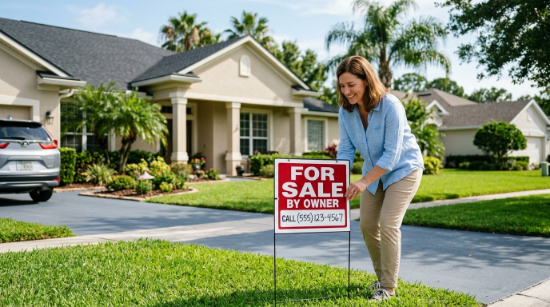
Visual suggestion: Insert image of a homeowner placing a “For Sale By Owner” sign in the yard.
Caption: Selling your home yourself starts with a clear strategy, realistic pricing, and preparation.
Step 5: Market Your Property Like a Professional
Marketing is where many FSBO sellers struggle. A traditional agent may list the home on the MLS and push it to buyer agents. If you sell home without agent support, you need your own marketing plan.
FSBO Listing Websites
Post your property on reputable FSBO websites. You may also consider a flat-fee MLS service if available in your area. MLS exposure can help your listing reach more buyers and buyer agents.
Social Media Marketing
Share the listing on:
- Facebook Marketplace
- Local Facebook groups
- Neighborhood groups
- Community pages
- Personal networks
Use strong photos, a short description, and clear contact information.
Yard Signs and Local Advertising
A yard sign can still help, especially if the property is in a high-traffic area. Add a phone number, QR code, or flyer box.
Word-of-Mouth Promotion
Tell neighbors, friends, local business owners, coworkers, and family. Neighbors often know someone who wants to move into the area.
Step 6: Manage Showings and Open Houses
Showings are time-consuming, but they are necessary in most FSBO sales.
Scheduling Showings
Use a calendar system to avoid missed appointments. Confirm each showing in writing. Ask whether the buyer is pre-approved or working with an agent.
Keep a simple log of:
- Buyer name
- Contact information
- Showing date
- Feedback
- Financing status
- Follow-up notes
Safety Tips for FSBO Sellers
You are letting strangers into your home, so be careful.
Before showings:
- Secure valuables
- Remove medication
- Lock up documents
- Keep pets contained
- Avoid being alone if possible
- Ask buyers to confirm identity
- Tell someone when a showing is scheduled
Creating a Positive Buyer Experience
Before each showing, turn on lights, open blinds, remove odors, adjust the temperature, and make the home easy to walk through.
Give buyers space to look, but be ready to answer questions.
Step 7: Review Offers and Negotiate
When offers come in, do not look only at price. A strong offer depends on several terms.
Understanding Offer Terms
Review:
- Purchase price
- Earnest money deposit
- Financing type
- Inspection contingency
- Appraisal contingency
- Closing date
- Seller concessions
- Repair requests
- Personal property included
- Buyer pre-approval or proof of funds
A higher offer with weak financing may be riskier than a slightly lower cash offer with fewer contingencies.
Counteroffers and Negotiation Strategies
Before negotiating, decide your priorities:
- Lowest acceptable price
- Preferred closing date
- Repairs you are willing to make
- Seller credits you will consider
- Items included in the sale
- Whether speed matters more than price
Do not negotiate emotionally. Treat buyer feedback as market information.
Evaluating Financing Contingencies
If the buyer needs a mortgage, the sale may depend on lender approval, appraisal, underwriting, and final closing conditions. The CFPB notes that borrowers generally receive a Closing Disclosure at least three business days before mortgage closing, which is one of several timing requirements that can affect financed sales.
Cash buyers can often close faster because there is no lender underwriting process.
Step 8: Navigate Contracts and Legal Requirements
This is one of the most sensitive parts of closing a home sale without a realtor.
Purchase Agreements
The purchase agreement should clearly define:
- Buyer and seller names
- Property address
- Purchase price
- Deposit amount
- Closing date
- Financing terms
- Inspection rights
- Appraisal terms
- Disclosures
- Included and excluded items
- Default provisions
Do not rely on verbal agreements. Everything important should be in writing.
Required Disclosures
Most sellers must disclose known material defects. This may include roof problems, water damage, mold, foundation issues, electrical problems, plumbing defects, pest damage, prior insurance claims, or other issues that affect the property.
Failing to disclose known issues can create legal problems after closing.
Working with a Real Estate Attorney or Title Company
Even if you sell house without realtor representation, you may still need professional help. A title company or real estate attorney can help with title search, escrow, deed preparation, payoff coordination, closing documents, and recording.
You should strongly consider professional help if:
- The property is inherited
- There are liens or unpaid taxes
- The house is in foreclosure or pre-foreclosure
- You are selling during divorce
- The buyer is unrepresented
- The property has tenants
- The title is unclear
- There are code violations or HOA issues
State-Specific Requirements
Every state has different rules. Florida sellers should be especially careful with disclosures, title issues, probate situations, liens, HOA matters, and closing requirements.
This article is educational only and is not legal advice. When in doubt, speak with a qualified real estate attorney or title company.
Step 9: Complete the Closing Process
Once you accept an offer, the closing process begins.
Home Inspection and Appraisal
The buyer may order a home inspection. If the buyer is using financing, the lender will usually require an appraisal.
After inspection, the buyer may ask for repairs, credits, or a lower price. You can accept, reject, or negotiate depending on the contract terms.
Final Walkthrough
Before closing, the buyer usually performs a final walkthrough to confirm the property is in the agreed condition.
Closing Day Checklist
Before closing day, confirm:
- All documents are ready
- Payoff amounts are correct
- Repairs are complete, if agreed
- Utilities are scheduled for transfer
- Keys and access codes are ready
- Personal items are removed
- Closing funds and wire instructions are verified
- You understand your final settlement statement
Also consider tax implications. IRS Publication 523 explains federal tax rules related to selling a home, including possible capital gains exclusions for qualifying homeowners.
Visual suggestion: Insert image of closing document signing.
Caption: The final step is signing closing documents and transferring ownership.
FSBO vs. Hiring an Agent vs. Selling to a Cash Home Buyer
| Factor | Selling Yourself | Hiring a Real Estate Agent | Selling to Quick Cash 4 Real Estate |
| Costs | May reduce listing agent commission | Usually includes agent commissions | No agent fees, commissions, or hidden costs based on your site’s offer |
| Control | High control, high responsibility | Shared control with agent guidance | You choose whether to accept the offer and closing timeline |
| Repairs | Usually expected by buyers | Often recommended before listing | No repairs required |
| Showings | Seller manages showings | Agent helps coordinate | No showings required |
| Marketing Reach | Depends on seller effort | MLS and agent network | No public listing needed |
| Time Commitment | High | Moderate | Low |
| Negotiation Support | Seller handles directly | Agent assists | Direct cash offer process |
| Closing Speed | Depends on buyer and financing | Often 30–60+ days after contract | Your site states closing can happen in as little as 7 days |
| Best For | Sellers with time and market knowledge | Sellers wanting retail exposure | Sellers wanting speed, certainty, and as-is convenience |
Quick Cash 4 Real Estate states that it buys houses, condos, mobile homes with property, commercial properties, and land in Central Florida, including properties with repairs, liens, or difficult situations.
Common Mistakes to Avoid When Selling Your House Yourself
Avoid these FSBO mistakes:
- Overpricing the property: Buyers compare your home to others. If the price is too high, they may never schedule a showing.
- Using poor-quality photos: Bad photos can make a good property look unappealing.
- Ignoring needed repairs: Buyers may use repairs to negotiate aggressively.
- Being emotionally attached: Your memories do not determine market value.
- Failing to disclose property issues: This can create legal risk.
- Accepting an unqualified buyer: Always verify financing or proof of funds.
- Not understanding contract terms: Deadlines, contingencies, and default clauses matter.
- Skipping professional help: A title company or attorney can prevent costly mistakes.
- Assuming FSBO is always cheaper: Savings can disappear if pricing, repairs, negotiations, or delays go poorly.
Is Selling Your House Yourself the Right Choice for You?
FSBO may be a good choice if:
- Your home is in good condition
- You have time to manage the process
- You understand your local market
- You are comfortable negotiating
- You can handle showings safely
- You already have a buyer
- You are willing to hire legal or title help when needed
FSBO may not be ideal if:
- You need to sell quickly
- The house needs major repairs
- You are behind on payments
- You are facing foreclosure
- The property has liens or title issues
- The home is inherited or in probate
- You live out of state
- You have difficult tenants
- You do not want showings
- You do not want to spend money before selling
In those situations, a direct cash sale may be more practical. Quick Cash 4 Real Estate’s process is designed around a simple three-step model: submit property information or call, receive a cash offer, and close quickly if you accept.
Frequently Asked Questions
Can I legally sell my house without a realtor?
Yes. In most cases, homeowners can sell their own property without hiring a realtor. However, you still need to follow state and local rules for contracts, disclosures, title transfer, and closing.
How much money can I save with FSBO?
The main potential savings come from avoiding a listing agent commission. However, you may still pay for photography, marketing, repairs, attorney review, buyer concessions, title fees, or buyer agent compensation depending on the sale.
Do I need a lawyer to sell my house myself?
Not always, but many FSBO sellers benefit from legal review. A real estate attorney can help review contracts, disclosures, title issues, and closing requirements.
How do I determine the right asking price?
Research comparable sales, review active competition, use online valuation tools carefully, and consider a professional appraisal. Pricing your home correctly is one of the most important FSBO home selling tips.
Where should I list my FSBO property?
You can list your property on FSBO websites, social media, local classifieds, yard signs, and flat-fee MLS services where available.
What paperwork is required to sell a house by owner?
Common documents include a purchase agreement, seller disclosures, tax records, title documents, HOA documents, inspection-related forms, payoff information, and closing documents. Requirements vary by state.
What if I want to sell without repairs, showings, or agent fees?
Then a direct cash sale may be a better fit than FSBO. Quick Cash 4 Real Estate buys houses in Florida in any condition and states that sellers can avoid repairs, agent fees, commissions, showings, and hidden costs.
Conclusion
Selling your house yourself can work if you have the time, patience, market knowledge, and confidence to manage the process. The key steps include pricing the home correctly, preparing it for buyers, gathering documents, creating a strong listing, marketing the property, managing showings, reviewing offers, handling contracts, and completing the closing process.
But FSBO is not the easiest path for every homeowner.
If your property needs repairs, you are facing a deadline, you inherited a house, you are dealing with liens or foreclosure, or you simply do not want months of showings and negotiations, a cash home buyer may be a simpler option.
FSBO stands for For Sale By Owner. It means you sell your home without hiring a traditional listing agent. You set the price, prepare the home, market the property, schedule showings, review offers, negotiate with buyers, and work through the closing process.